The fizzing mix of baking soda and white vinegar is the first thing most people try on a slow drain, and it earns that spot because it is cheap, safe for pipes and already in the pantry. It is also oversold. The fizz is mostly carbon dioxide gas and salty water, and it has little force against a solid clog.
This guide explains what the mixture really does, the safe way to use it, which products must never be combined with it, and which clogs it cannot touch. It also covers what changes in Simsbury, where some homes are on the public sewer and others on septic.
What the fizz actually does inside a pipe
Baking soda is a mild base and vinegar is a mild acid. Together they react into carbon dioxide, water and sodium acetate, and the bubbling can loosen a thin film of soap scum or a light coating of food residue on the pipe wall.
The reaction burns out quickly and neutralizes itself, so little cleaning power is left after that. What does the real work is the hot water flush that follows, which carries loosened film downstream. A thick plug of hair, a wad of grease or a foreign object stays exactly where it was.
The safe method for a slow or smelly drain
Use this on sinks, tubs and showers that drain slowly but are not fully stopped.
- Remove standing water with a cup, and pull out any visible hair or debris from the drain opening.
- Pour in about half a cup of baking soda, working it down with a spoon.
- Add about a cup of white vinegar, then cover the drain with the stopper or a wet rag to push the fizz downward.
- Wait 15 to 30 minutes, which gives the reaction time to loosen film on the pipe wall.
- Flush with a kettle of very hot tap water, not boiling water, if the drain pipes are PVC.
- Run the faucet for a full minute and watch how fast the water leaves the basin.
Never mix these with vinegar, baking soda or each other
Combinations that make dangerous gas
Chemical drain products and household cleaners do not belong in the same drain on the same day.
- Bleach and vinegar release chlorine gas. Bleach and ammonia make toxic fumes, and the Connecticut Department of Public Health warns never to mix them.
- Commercial drain openers, which are strong acids or lye-based, can splash back and burn skin and eyes when combined with water or other chemicals.
- If a chemical opener is already sitting in a blocked drain, do not add vinegar. Tell any plumber what you used before they open the trap.
- Never use a plunger in a sink holding drain chemicals, because the splash is the hazard.
Which clogs vinegar and baking soda can and cannot clear
The mixture is a maintenance step. Match the clog to the tool before spending time on the wrong one.
| Clog type | Works | Better choice |
|---|---|---|
| Light soap scum film | Yes, along with hot water | Repeat monthly as upkeep |
| Hair in a tub or sink | Rarely | Drain-clip tool or small drain snake, then trap cleaning |
| Grease plug in a kitchen line | No | Cool the pipe, snake it, or a plumber's hydro jetting pass |
| Toilet paper or wipes in a toilet | No | Plunger, then a closet auger |
| Tree roots in the main line | No | Cable or jetting after a camera look |
Drain still backing up?
Skip another round of fizz and call the 24/7 line. Same-day appointments when available.
Why a drain keeps clogging after you treated it
A drain that clears for a day and slows again usually has a blockage that was only punctured. Hair in a bathroom sink tailpiece, grease coating a kitchen line, and a partial blockage further down all behave this way. The water finds a thin path, then the buildup closes it again.
A bad slope or a sagging pipe section holds standing water and collects solids, and no household solution fixes geometry. If more than one fixture is slow, the problem has moved downstream of the sink. That is when a plumber's drain cleaning with a cable or a camera is faster than repeated home attempts.
Safer alternatives to try before a plumber
- A plastic drain-clip tool or barbed strip pulls hair out of tub and sink drains, and it is the cheapest step in this list.
- A cup plunger, with the overflow opening blocked by a wet rag, clears many partial blockages in a sink.
- Unscrewing and cleaning the P-trap under the sink takes ten minutes, and a bucket and gloves are all you need.
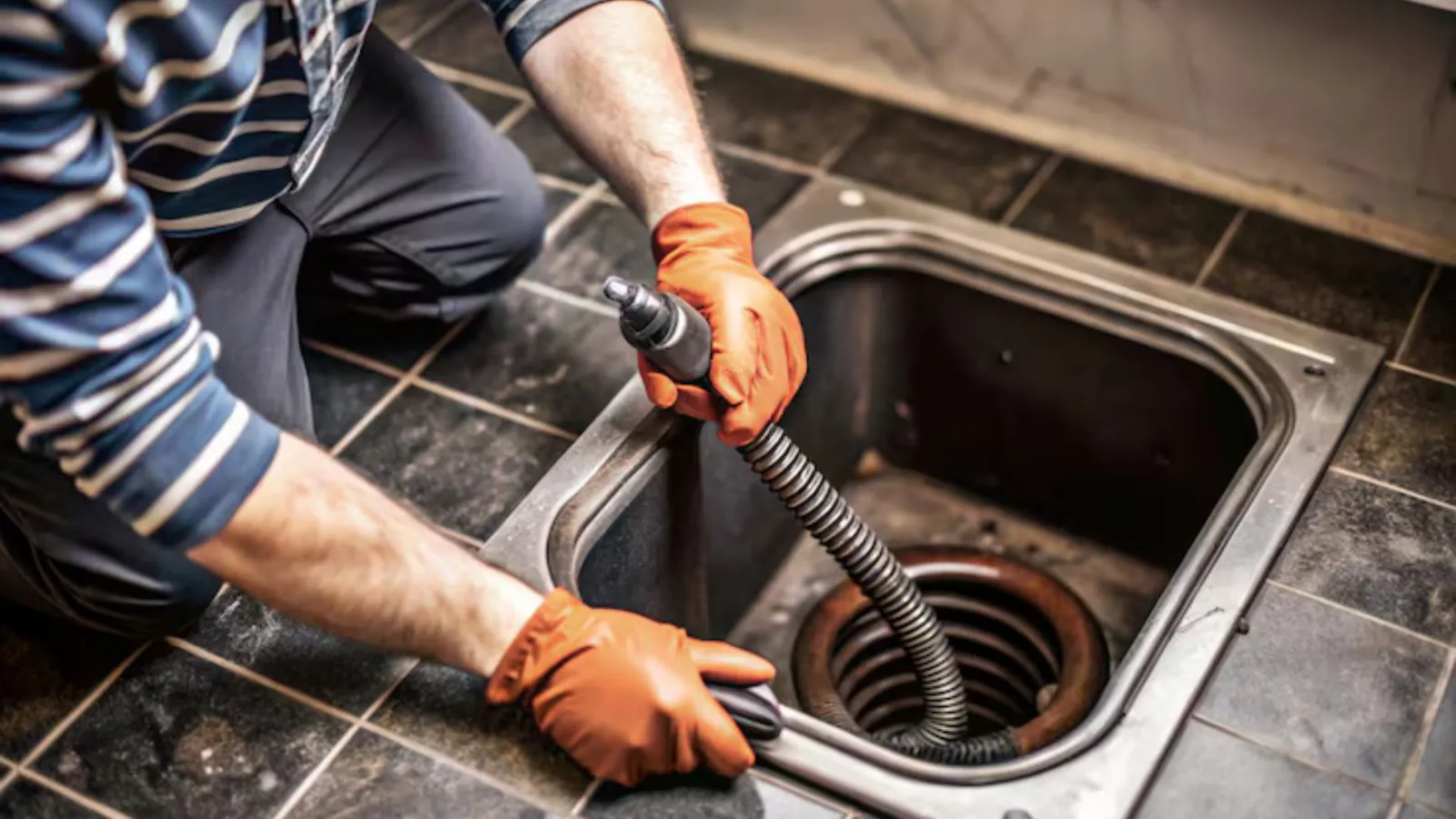
- A hand-crank drain snake reaches past the trap to clear a plug eight to ten feet down.
- An enzyme cleaner, used as directed, eats organic film slowly, but it does not clear a solid blockage.
What Simsbury homeowners should know about septic and sewered drains
Not all properties in Simsbury are connected to the public sewer. The Town says the Water Pollution Control Facility can tell you whether a property is within the sewer service area, and that septic systems are serviced by private companies and fall under the Farmington Valley Health District. Before you pour anything stronger than kitchen ingredients down a drain, find out which side you are on.
On septic, the EPA says flush only human waste and toilet paper. It lists cooking grease or oil, non-flushable wipes, coffee grounds, paper towels and household chemicals as things never to flush, and it does not recommend septic tank additives. Commercial drain openers are household chemicals, so a septic home should rely on the mechanical options above.
On the public sewer, the same grease and wipe habits cause backups in your own lateral first. The Town says pipes inside a building and the lateral to the main are the owner's responsibility, so a clog there is yours to fix. If several drains slow at once or sewage appears outside, that points to the main line, and the Simsbury Water Pollution Control Facility should hear about visible sewage.
Frequently Asked Questions
In the small quantities used for drain upkeep, it is generally gentle. EPA advice on septic care is to avoid household chemicals and tank additives, which is the larger risk, so skip commercial openers.
If drains are slow often, the system itself may need inspection, since the EPA lists slow drains and gurgling among the signs of a failing septic system.
Use very hot tap water instead. Boiling water can soften PVC drain pipes and joints, and it can crack a porcelain sink or tub. A kettle that has just stopped boiling is a fair compromise on metal pipes.
Once a month is plenty for upkeep. Repeating it daily on a drain that stays slow wastes time, because the blockage is not the kind the mixture removes.
Call the Simsbury Water Pollution Control Facility, which can say whether a property is within the sewer service area. If it is not, you are on septic, and the Farmington Valley Health District covers those systems.
Your home inspection papers or property records may also show it.
- Town of Simsbury, How do I find out if a property is connected to public sewer
- Town of Simsbury, If you have a plumbing blockage
- EPA septic frequently asked questions
- EPA resolving septic system malfunctions
- 2022 Connecticut State Building Code (2021 IPC plumbing edition), CT DAS Office of State Building Inspector