When sewage is rising in a tub or floor drain from a line packed with roots or grease, call the 24/7 line and stop using water in the house. Keep the toilets unflushed, stay out of any wet basement area that has outlets or a furnace nearby, and let us know which drains are backing up. A backup like that usually needs more than a cable pulled through the middle.
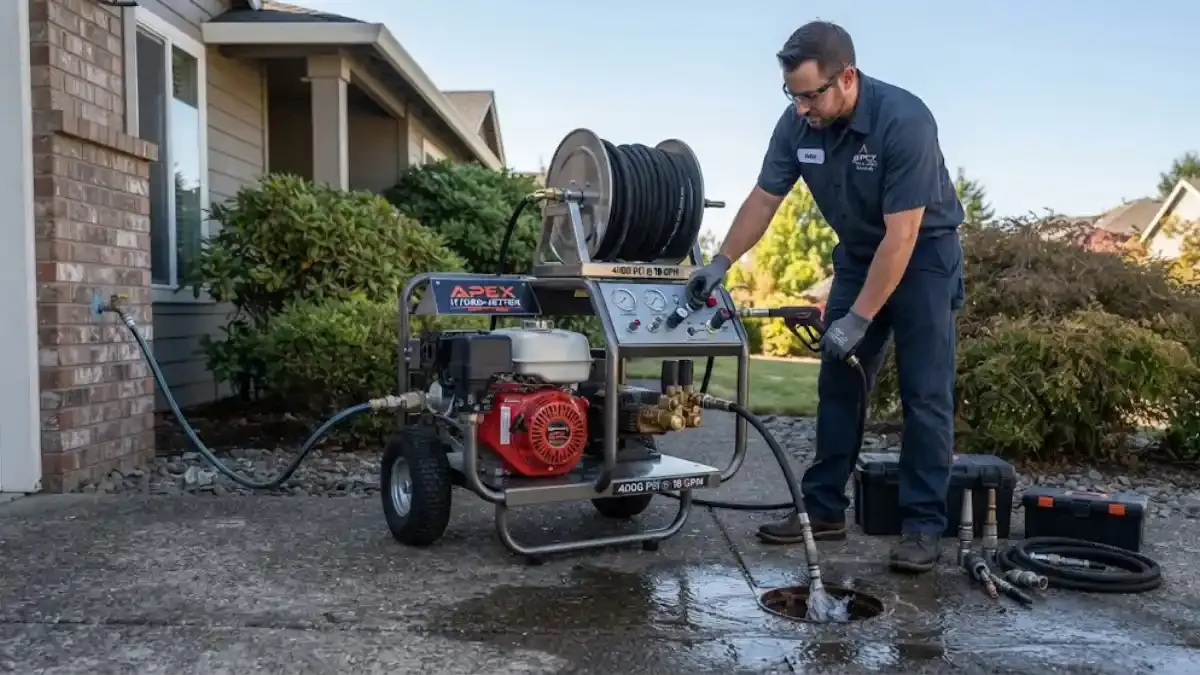
Emergency hydro jetting in Simsbury, CT is the cleaning method where a hose with a nozzle sends pressurized water forward and backward inside the pipe. The jets cut through root hair and scrub grease and scale off the walls, so the line returns to something close to its full diameter. A cable punches a hole through a blockage, and a jet cleans the pipe itself.
That power is also why we do not jet blindly. A camera look comes first on almost every job, and it decides whether jetting is the right move or the wrong one.
Sewer backing up from roots or grease: what to do now
Before the plumber arrives
Roots and grease both load a line slowly, then fail all at once on a heavy laundry day or after a holiday dinner.
- Stop the dishwasher, washer and every faucet. A full line has no room for more.
- Do not pour a cleaner into a rising drain. It sits in the water and adds a chemical hazard to the sewage.
- Find your sewer cleanout, if you have one, and leave the cap on until we are there.
- Keep a note of which fixtures gurgle or back up, since it tells us how far down the blockage is.
Why older buildings in Simsbury call for a camera before a jet
The town lists four National Register districts, East Weatogue, Simsbury Center, Tariffville and Terry's Plain, and buildings in historic areas tend to be older. Older buildings tend to have older drain lines, which can mean clay, cast iron, offset joints or past repairs. That is a general tendency, not a statement about any one pipe.
So if you live in or near one of those districts, expect us to run a camera down the line before any jet goes in. The picture tells us whether the pipe can take full-pressure water, whether a joint has shifted and where the roots are entering. It also gives you a recording to keep.
What roots, grease and scale each do to a line
Roots
Fine roots find the moisture at a joint, slip through, then thicken into a mat that catches paper. A jet with a cutting nozzle shreds them, but they grow back, so root jobs repeat.
Grease
Cooking fat cools and clings to the pipe wall, narrowing it a little each month. A kitchen line often shows a white, waxy lining on camera, and jetting is the thorough way to strip it.
Scale and buildup
Mineral scale and soap residue roughen the wall so debris catches. Simsbury water averaged 10 grains per gallon in the 2025 Aquarion report, so scale on fixtures and in lines is plausible, and a camera shows how much is in yours.
Combined clogs
A grease-coated pipe with a root mat is common in a main that has been snaked repeatedly. Snaking only opens a channel, while the jet cleans the wall around it.
Roots or grease in the line?
The 24/7 line is open for backups, with same-day appointments when available.
When jetting is the wrong call
Jetting is not safe on every pipe, and we say so when the camera shows it.
Good candidates
- Pipe that is intact with sound joints.
- Grease, scale or root growth along a long run.
- A line that clogs every few months after being snaked.
- A kitchen or main line where a cable only reopened a small channel.
Camera first, jet later or never
- A collapsed or crushed section, where water can wash out soil.
- Very fragile pipe, such as cracked clay or badly corroded cast iron.
- A belly full of standing water that suggests a sag, not a clog.
- A line that needs sewer line repair before it can be cleaned.
How a jetting visit runs
Confirm the problem
We ask which drains are affected, then pull a cleanout cap or a toilet and check what the water is doing.
Camera pass
The camera finds the blockage, shows the pipe condition and tells us if jetting is safe.
Jet the line
A nozzle is fed in and pulled back with water running, cutting roots and scouring the wall out to the main.
Look again and explain
A second camera pass confirms the line is open, and we tell you what we saw and what to watch for next.
How often should a line be jetted?
There is no honest number that fits every house. A line with heavy root growth may need attention in a year or two, while a grease-prone kitchen run might do well after a careful cleaning and a change in what goes down it. We base the interval on what the camera shows, not a fixed schedule.
If roots are the problem, jetting is a maintenance job rather than a cure. A line with many entry points may be a candidate for lining or replacement, and we will lay out that comparison honestly. The sewer line cleaning page covers the wider main line picture.
What shapes the cost of a jetting job
We do not publish prices because a ten-foot kitchen branch and a long main with roots are very different jobs. You get a clear price before work starts.
The Insurance Information Institute notes that a typical homeowners policy and flood insurance do not cover sewer backups, so check whether you bought an endorsement. Ask us for your real number when you call.
Safety and limits of high-pressure water
The water that cleans a line can also injure a person or damage a fixture, which is why jetting is done by a trained plumber with the line contained. Pressure is set to the pipe, and a toilet or open fixture can be turned into a spray if it is not managed. Never try to rent or improvise a jetter on a sewer line.
Jetting does not fix a broken pipe, a low spot or a tank that needs pumping. Restaurants and shops with grease problems may also need interceptor service, which belongs under commercial plumbing. If your home is outside the sewer service area, call Simsbury's Water Pollution Control Facility at 860-658-3258 to confirm where you stand. For a line that crosses into Canton, see plumber Canton CT.
Frequently Asked Questions
Yes. The 24/7 line is open at night and on weekends, and we book after-hours visits when a crew is available. Tell us which drains are backing up, and we will begin with a camera look so the jet goes into a pipe that can take it.
It can be, if the pipe is intact. Cracked clay, thin cast iron and collapsed sections can be damaged by pressure, so a camera comes first. If the pipe is fragile, we recommend a gentler cleaning or a repair.
A snake opens a hole through the clog. A jet cleans the pipe wall, which is why jetting handles grease and scale better. Snaking is often enough for a single fixture.
No. It cuts the roots inside the pipe, but they can regrow from the entry point. If the camera shows many entries, a repair or lining may be a better long-term choice.
Yes in most cases. A look before tells us if jetting is safe, and a look after shows the line is open. You can ask for the recording.
Grease clogs follow heavy kitchen use and often start in the kitchen sink. Root clogs hit the main line, tend to recur and may worsen after rain or in growing season. A camera is the way to be sure.
Often, when a crew is available. Call the 24/7 line, tell us what is backing up and we will book the earliest visit we can.
- Simsbury National Register districts (Town of Simsbury)
- Aquarion 2025 Simsbury Regional water quality report
- Town of Simsbury: how to find out if a property is connected to public sewer
- Insurance Information Institute: which disasters are covered by homeowners insurance
- 2022 Connecticut State Building Code (2021 IPC plumbing edition), CT DAS Office of State Building Inspector