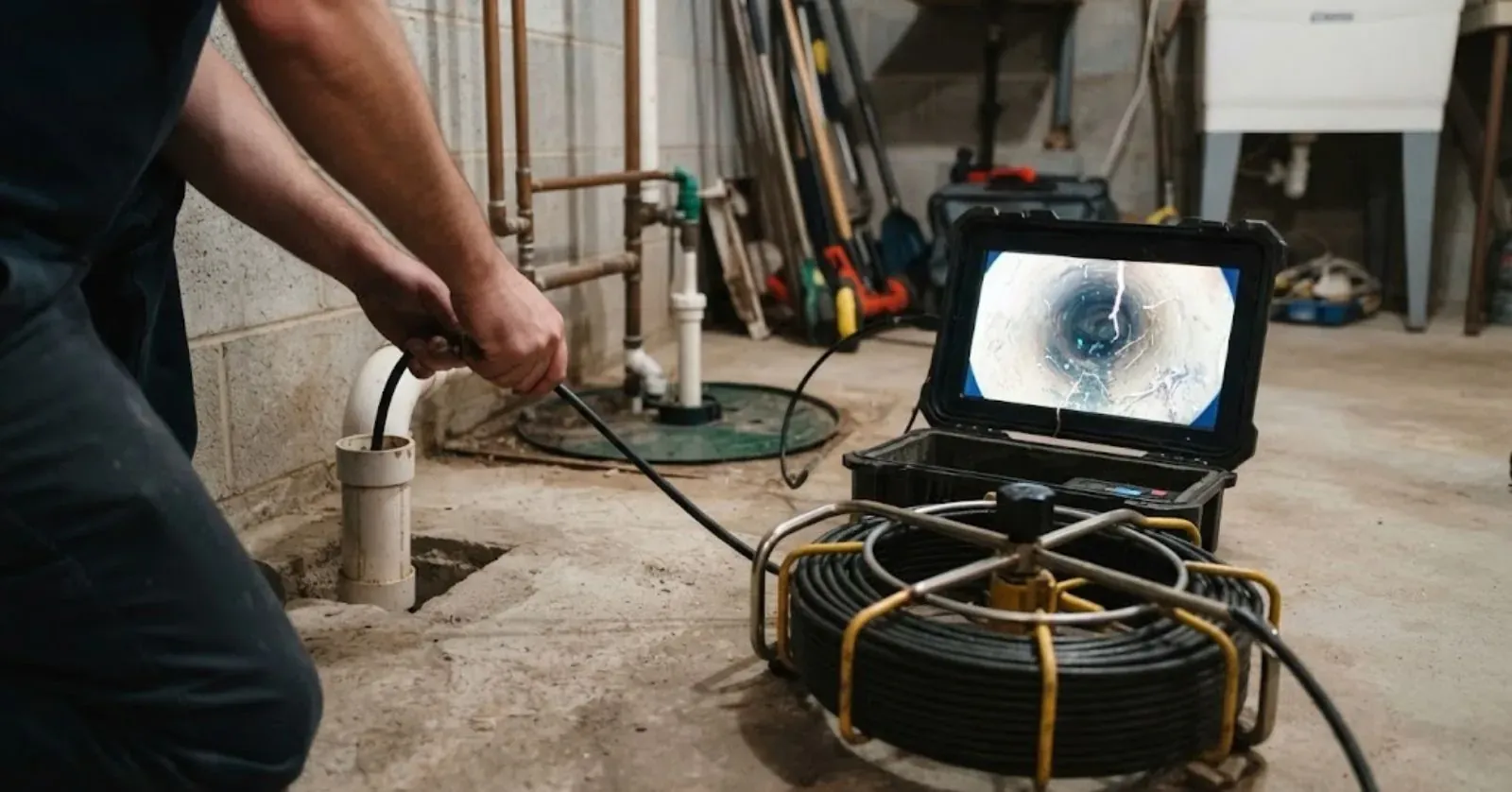
A sewer inspection in Simsbury, CT is a video look inside the pipe that carries waste from your house to the town sewer or to your septic tank. A small waterproof camera is pushed through a cleanout, and a plumber watches the picture, notes distances and records what the pipe looks like. It is the only way to know the condition of a line you cannot see.
People book one for four main reasons. Buyers want to know what they are inheriting, owners with repeat clogs want a cause, a sewer smell needs an explanation, and a landscape or addition project needs to avoid the line. Most inspections are planned visits, and if a failure turns urgent, the 24/7 line is there.
Before you buy a Simsbury house: why the line deserves a look
A standard home inspection looks at what can be seen, and the sewer lateral is buried. A buyer who skips the camera accepts the risk of roots, a cracked section or a belly that only shows up after the first heavy laundry weekend. Since the pipes inside a building and the lateral to the main are the owner's responsibility in Simsbury, a bad line becomes your cost the day you close.
Ask the seller whether the property is on the public sewer or on septic. The town's Water Pollution Control Facility at 860-658-3258 can confirm whether an address is in the sewer service area, and the Farmington Valley Health District at 860-352-2333 handles septic. A septic property needs the camera for the house line and a separate tank inspection by a septic company.
Repeat clogs, sewer smells and other reasons to book
Clogs that keep returning
If a line has been snaked more than once, something in the pipe is holding debris. The camera shows roots, a low spot or heavy scale, which tells you whether to clean, repair or watch.
A sewer smell
Dry traps and vents cause many smells, but a cracked or open line can too. The camera rules the line in or out so you stop chasing the wrong cause.
Landscape, patio or addition
Digging near an unknown line is how pipes get hit. Locating the line and checking its depth and condition before a project saves a repair after it.
Before selling or refinancing
A recording that shows a sound line is a useful document for a buyer. One that shows a problem lets you decide on repairs before an offer comes in.
What the camera can and cannot see
It can show
- Root intrusion at joints and cracks.
- Cracks, offset joints and broken sections.
- Bellies where water sits in a low spot.
- Scale, grease and debris along the wall.
- Distance from the cleanout to each problem.
It cannot show
- The condition of the soil or voids outside the pipe.
- A pipe with water so deep the lens is submerged.
- Anything past a full blockage or collapse.
- Water supply leaks, which are a separate system.
- The inside of a septic tank, which needs its own inspection.
Finding the cleanout, and locating the line from above
The camera usually enters through a cleanout, a capped pipe in a basement, crawl space or yard. If there is no cleanout, a plumber can go in through a pulled toilet, which takes more time. We may also suggest adding a cleanout, which makes every later inspection simpler.
To trace the line from above, the camera head carries a small transmitter and a handheld receiver picks up its signal at the surface. That marks the line's path and depth on the ground, which is what a landscaper or excavator needs. The marks are for planning only. Anyone digging with power equipment in Connecticut must still call 811 at least two full business days beforehand so the utilities mark their lines.
Planning a purchase or a project?
We book sewer camera visits as planned appointments, and the 24/7 line stays open if the line fails.
What the findings mean and what to do next
A finding is not a verdict. It is a reason to choose among a few options.
| What the camera shows | What it usually means | Typical next step |
|---|---|---|
| Clean, round pipe, good joints | Line is in sound shape | Keep the recording, no action |
| Grease or scale on the wall | Buildup narrowing the pipe | Clean it, see main line cleaning |
| Roots at joints | Pipe is open at those points | Cut the roots, then seal or monitor |
| Belly with standing water | Pipe has settled | Discuss repair or replacement |
| Cracked or collapsed section | Pipe has failed there | Repair the section before the next backup |
Using the video in a sale or a repair decision
Buyers can use a recording to ask the seller to repair the line, adjust the price or walk away. Sellers can use one to show the line is sound or to repair a known problem before listing. Either way, an honest video beats a guess.
For a repair decision, the footage lets you compare quotes. Show the same video to any contractor and ask them to explain what they would do about the specific defect at a stated distance. If the camera finds buildup only, hydro jetting may be all you need.
How to ask for the video
Ask before the visit, so the recording is part of the job.
- Request the full recording, not only a clip of the defects.
- Ask that the footage show the distance counter, so each finding has a position.
- Ask for a short written note of what was seen and where.
- Ask how long the file will be kept and in what format it will be shared.
- Keep a copy with your closing papers or home records.
How an inspection visit runs
Tell us the reason
Buying, repeat clogs, a smell or a project. The reason decides what we look for.
Access the line
A plumber finds the cleanout or pulls a fixture and checks the flow.
Run the camera
We record while the camera moves toward the main, noting distance and defects.
Review and locate
You see the footage, and we mark the line path if you need it for a project.
What shapes the price of an inspection
We do not publish prices because a short line with a cleanout is a different job from a long run that needs cleaning first. You get a clear price before work starts.
A typical homeowners policy does not cover sewer backups without an endorsement, according to the Insurance Information Institute, so a camera look before a problem is worth more than a claim after one. Ask us for your real number when you call.
What an inspection will not tell you
A camera inspection is a snapshot of one line on one day. It will not tell you about a leak in the water supply pipes, which is a job for leak detection, and it will not replace a septic tank inspection. If you own a shop or a rental building, the same method applies to larger lines under commercial plumbing. Buyers in nearby Avon can start from plumber Avon CT.
Frequently Asked Questions
A short visit is typical when there is a clean access point and the line is clear. A long run, a blocked pipe or a locate request adds time.
It is a smart step because the lateral is the owner's responsibility and a standard home inspection cannot see the pipe. If the house is on septic, ask for the line camera plus a separate tank inspection.
Yes, with a locating transmitter on the camera head. The marks help plan digging, but you still call 811 before excavating.
Ask for it when you book. A good inspection includes a recording you can keep and show a seller or contractor.
It works on the house line leading to the tank. The tank itself needs a septic company, and the Farmington Valley Health District at 860-352-2333 oversees septic systems in town.
A full blockage, a collapse or a severe offset stops it. We note where it stopped and what we saw, then talk through cleaning or repair.
- Town of Simsbury: how to find out if a property is connected to public sewer
- Town of Simsbury: if you have a plumbing blockage
- PURA: Call Before You Dig, homeowners
- Insurance Information Institute: which disasters are covered by homeowners insurance
- 2022 Connecticut State Building Code (2021 IPC plumbing edition), CT DAS Office of State Building Inspector