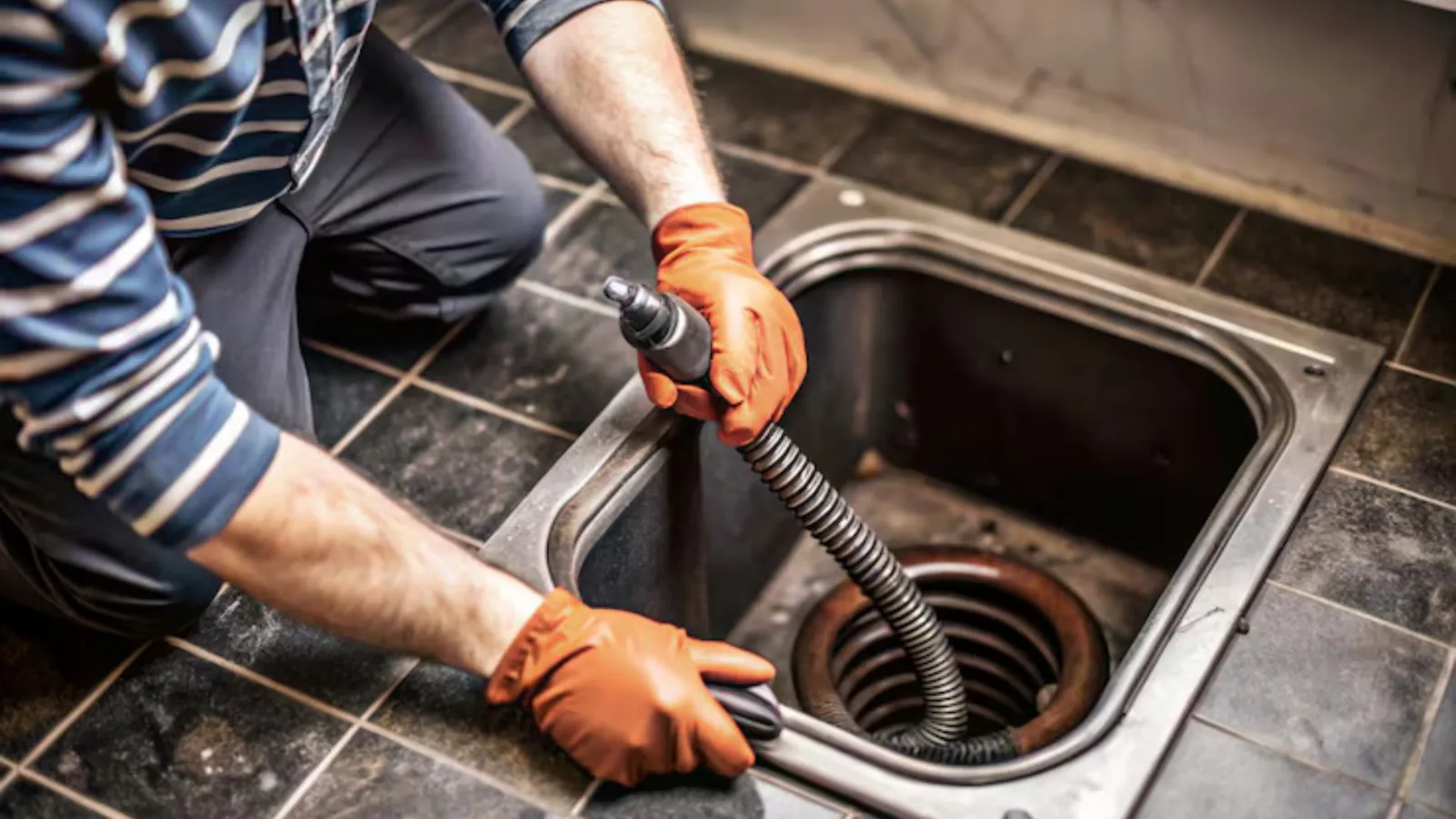
If a drain is backing up and water is reaching the floor, treat it as an emergency, because the 24/7 line is open for exactly that. Stop running water everywhere in the house, keep people and pets away from the wet area, and stay clear of outlets and power strips that sit in or near standing water. Do not flush a toilet that is gurgling or rising, since every flush sends more water toward the same blockage.
Emergency drain cleaning in Simsbury, CT means finding where the clog sits and removing it with the right tool. A snake or cable breaks through or pulls out the blockage, a hydro jet scours the pipe wall, and a camera shows what is actually in there. The answer for a slow bathroom sink is very different from the answer for a sewage-smelling basement floor drain.
In Simsbury there is one question that changes the whole job. Some properties are connected to the public sewer and others run on a private septic system, so we start by asking which one you have.
Water on the floor: what to do while you wait
Do these in order
A backup that is reaching finished floors or a basement is urgent, and the steps below limit the damage until a plumber is on site.
- Stop using sinks, tubs, showers, the dishwasher and the washing machine. Every gallon you add has nowhere to go.
- Turn off power to any room with standing water if you can reach the panel without stepping in water. If you cannot, leave it and tell us when you call.
- Wear rubber gloves around sewage. Connecticut health guidance warns that sewage carries bacteria and viruses, so keep children and pets out.
- Open a window if there is a sewer smell, and call the 24/7 line so we can book a same-day or after-hours visit.
Sewer or septic? Settle that before you pour anything
Simsbury does not run public sewer to every property. The town says not all properties are connected, and to find out whether yours is in the sewer service area you can call the Water Pollution Control Facility at 860-658-3258. Septic systems are serviced by private companies rather than the Town and fall under the Farmington Valley Health District, reachable at 860-352-2333.
That answer decides what happens next. On a sewered property, a clog past your own pipes can sit in the town main, and a backup that hits several drains at once may call for a quick check with the sewer authority. On septic, a slow drain can mean the tank is full or the drainfield is struggling, and a plumber clearing the house line will not fix a tank that needs pumping.
Septic owners should also know the EPA's flush list. Grease, wipes, coffee grounds, paper towels and cat litter do not belong in a toilet or drain, and the EPA does not recommend septic tank additives. If you are on septic and the whole house is slow, say so on the call, because the plan is different.
Kitchen, tub, laundry or main line: where the clog lives
Which fixtures are slow tells us how deep the blockage is. One slow fixture usually means a local clog, while several at once point to the main.
Kitchen sink
Cooking grease cools inside the pipe and holds food scraps against the wall. If the disposal is involved, we pull the trap and run a cable past it, because clearing only the trap often leaves the real plug behind.
Tub and shower
Hair wrapped in soap film is the usual cause, and it sits in the drain shoe or just past the trap. A short cable or a drain tool usually clears it, but a tub that drains slowly again within weeks suggests a deeper snag.
Laundry
Lint, detergent residue and small socks collect in the standpipe and branch line. A washer that overflows its standpipe during the drain cycle needs a cable run, and the standpipe height is worth checking too.
Main line
Toilets bubbling, a basement floor drain gurgling and the shower rising when the washer drains all signal the main. This is the case where a main line cleaning and a camera usually go together.
What to try before you call, and what to keep out of the pipe
A few safe steps are worth five minutes if nothing is overflowing. The moment water is coming up, stop and call.
Safe to try
- A flat-bottom plunger on a sink or tub, with the overflow opening blocked by a wet rag.
- Removing the pop-up stopper and pulling out the hair mat by hand.
- Unscrewing the trap under a sink into a bucket and clearing it.
- Boiling water on a slow kitchen drain that is plastic or metal, never poured into a cracked bowl.
Leave alone
- Liquid caustic drain openers, which sit in standing water, burn skin and make the next plumber's job hazardous.
- Hot water and dish soap to wash grease down, since it cools and hardens farther along the pipe.
- Flushing wipes labeled flushable, which do not break up like paper.
- Pushing a garden hose or a coat hanger into a main line cleanout.
Drain backing up right now?
The 24/7 line is open nights and weekends, with same-day appointments when available.
How we find the clog
We begin by asking which fixtures are affected and when it started, then check the trap, the vent and the nearest cleanout. A cable machine with the right head goes in through a cleanout, a removed trap or a pulled toilet, depending on where the blockage sits.
When a snake clears the water but the clog returns, a drain camera shows why. It might be roots at a joint, a belly where waste sits, a crushed section or years of scale. If the picture shows more than a clog, a full sewer camera inspection gives you a recording and a clear next step, and we will say plainly if the line needs repair rather than another cleaning.
Snake or hydro jet: which job needs which tool
Both tools have a place, and neither is better in every case.
| Point | Cable or snake | Hydro jet |
|---|---|---|
| Best for | A single blockage such as hair, a toy or a grease plug | Grease coating, scale and root hair along the whole pipe wall |
| Typical use | Fixture and branch lines, an emergency backup | Main lines and repeat clogs, covered in hydro jetting |
| Limit | Can bore a hole and leave the pipe wall coated | Not for collapsed or fragile pipe, so a camera look comes first |
| Speed | Quick, often done during the first visit | Slower setup, and the line is clean end to end afterward |
How a drain call runs
Describe it on the call
Tell us which drains are slow, if water is rising and if you are on sewer or septic. We book a same-day or after-hours visit when available.
Locate the blockage
A licensed plumber checks the fixture, trap and cleanout and runs the cable, using a camera if the cause is unclear.
Clear and test
We clear the line, run water through every affected fixture and look for gurgling or slow drainage.
Agree the next step
You get the price before work starts, along with a plain recommendation for jetting, inspection or repair if the cause is deeper.
What shapes the price of clearing a drain
We do not publish prices because the same symptom can come from a five-minute trap clog or a root mass thirty feet out. You get a clear price before work starts.
Homeowners insurance usually excludes sewer and drain backups unless you bought a separate endorsement, according to the Insurance Information Institute, so check your policy before assuming the cleanup is covered. Ask us for your real number when you call.
When drain cleaning is not the answer
A clean line does not fix a collapsed pipe, a septic tank that needs pumping or a clog that sits in the town main. We will tell you when the right call is a septic pumper, the sewer authority or a repair, and we will not clear a line just to clear it.
If sewage is showing in the street or yard, tell the Water Pollution Control Facility at 860-658-3258, or 860-777-8756 after hours, because that can be a public main problem. If a lateral does need work, it can fall under sewer line repair, and a licensed plumber must do it. Granby, which borders Simsbury to the north, has its own page at plumber Granby CT, and the same 24/7 line covers both towns.
Frequently Asked Questions
Yes. The 24/7 emergency line is staffed around the clock, and after-hours visits are booked when a crew is available. Tell us if water is on the floor, which drains are affected and if you are on sewer or septic, so the right tool goes on the truck.
Run the fixtures one at a time. If only one is slow, the clog is local. If a toilet bubbles when the washer drains, or a basement floor drain gurgles, several lines are sharing a blockage and it is probably the main.
A snake suits a single blockage and a quick emergency fix. A hydro jet fits repeat clogs, grease or root hair along the pipe wall, and only after a camera look confirms the pipe is sound enough.
It is better not to. Caustic cleaner sits in standing water, can burn skin and eyes, and leaves a hazard for whoever opens the trap next. Stop running water and wait for the visit.
Not always, since a simple trap clog needs no camera. We bring one when the clog returns, when several drains are affected or when the cable meets resistance it cannot explain, and you can ask to see the picture.
Yes for the house drains and the line to the tank. A full tank or struggling drainfield is a different job, so we will say so, and the Farmington Valley Health District at 860-352-2333 oversees septic systems in town.
A repeat clog usually means something in the pipe holds debris. Grease coating, roots at a joint or a low spot in the line are the usual suspects, and a camera shows which.
- Town of Simsbury: how to find out if a property is connected to public sewer
- Town of Simsbury: if you have a plumbing blockage
- EPA: frequent questions about septic systems
- Connecticut DPH sewage back-up fact sheet
- Insurance Information Institute: which disasters are covered by homeowners insurance
- 2022 Connecticut State Building Code (2021 IPC plumbing edition), CT DAS Office of State Building Inspector