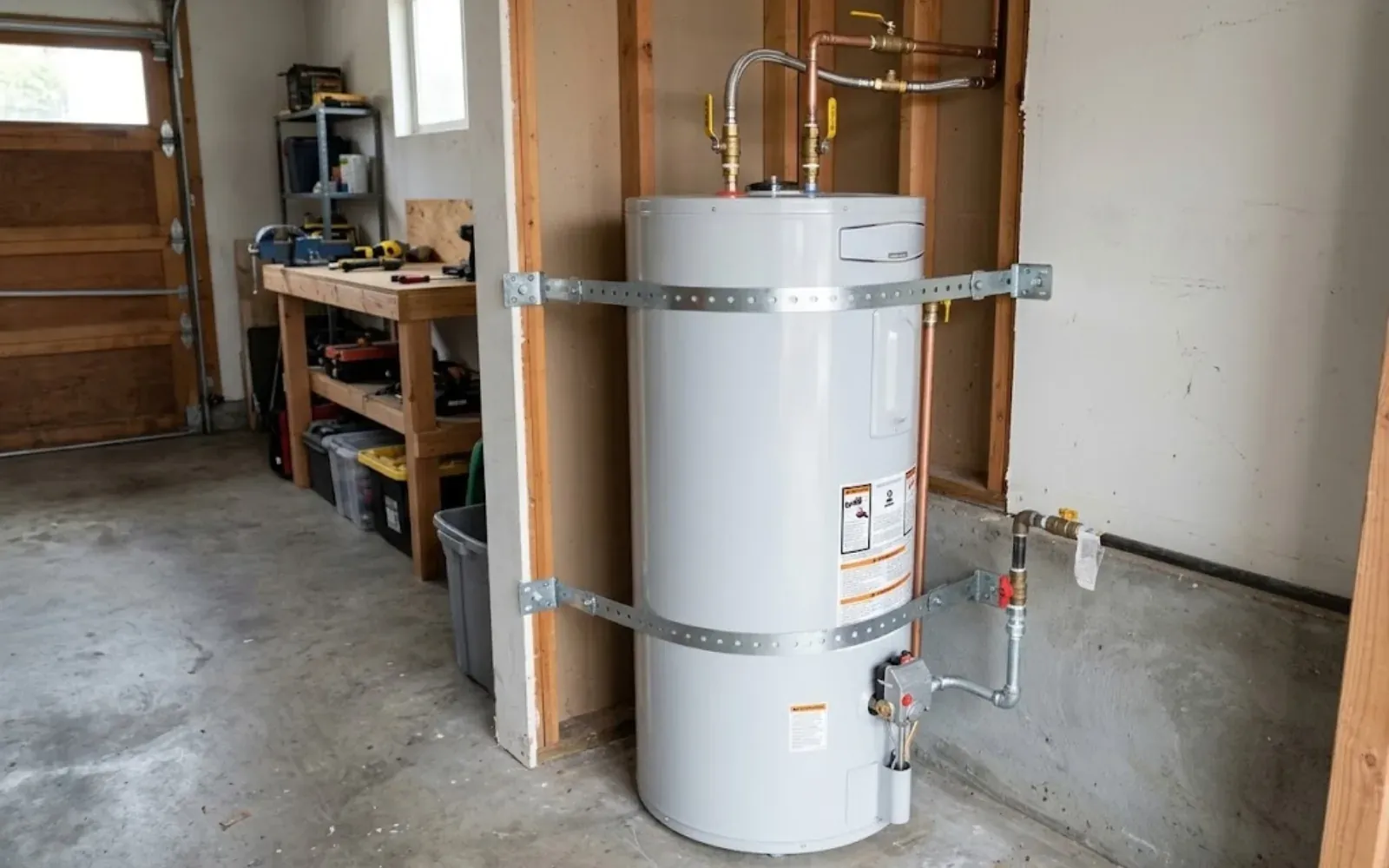
A failed water heater in Simsbury, CT rarely gives warning. You find a spreading puddle in the basement or a closet full of rusty water, and the shower has gone cold. The 24/7 line takes these calls at any hour. While you wait, close the cold supply valve above the tank, shut off its breaker or gas control, and stay away from any outlet or panel that is standing in water.
Water heater replacement is the full swap of a failed unit. The old tank is drained and removed, a new one is set and leveled, and the water lines, fuel or power, venting, relief valve and drain are reconnected and tested. Done properly it is a job for a licensed plumber, because gas and water piping work is regulated in Connecticut.
Same-day replacement is offered when stock and the schedule allow. After-hours and weekend calls reach the same dispatcher.
Failed tank flooding the floor: what to do first
Contain it, then collect details
A split tank can release dozens of gallons quickly, so stopping the supply matters more than cleanup.
- Turn the cold inlet valve clockwise until it stops. If it will not budge, shut the main water valve instead.
- Kill the power at the breaker, or set a gas control to off. Gas smell means leave the house and call Connecticut Natural Gas at 866-924-5325 or 911.
- Photograph the data plate on the side of the tank, which shows the capacity and fuel, and note how the flue or vent leaves the room. This lets the plumber arrive with a matching unit.
- Lift cardboard, rugs and stored boxes off wet concrete and run a mop or wet vacuum.
Repair or replace: a quick decision guide
DOE says most storage water heaters last 10 to 15 years. Age matters, but so does the way the unit failed.
| What happened | Lean toward | Why |
|---|---|---|
| Water seeping from the shell or bottom seam | Replace | The steel liner is breached and cannot be patched. |
| Failed part on a young tank | Repair | A thermostat, element or igniter on a sound tank is a smaller job. See emergency water heater repair. |
| Tank in the 10 to 15 year window with a costly part failing | Replace | Spending on an old tank often just postpones this same call. |
| Rust-colored hot water | Replace | Corrosion inside the tank has usually advanced. |
| Second failure in a short span | Replace | Another part is probably close behind. |
Choosing size, fuel and venting
The fastest swap is a like-for-like one, so the plumber will usually start by matching your current unit. If the household has grown or shrunk, say so. Capacity should follow how many people shower and run laundry at once, and a bigger tank is not automatically better, since it costs more to keep warm.
Fuel type
Simsbury is listed under Connecticut Natural Gas on the state utility regulator's coverage table. Gas units draw from that service, while electric units need a suitable dedicated circuit. Changing fuel is possible, but it adds gas piping, venting or electrical work, so it is better planned than done mid-emergency. A planned installation is the better route for conversions.
Venting and combustion air
A gas tank has to exhaust through a flue sized and pitched for that appliance. EPA lists back-drafting from gas water heaters and blocked or disconnected flues as carbon monoxide sources, so the old vent is inspected rather than reused on trust. Rusted flue pipe, loose joints or a crushed liner get replaced with the heater.
Expansion tank and valves
Many homes now have a check valve or pressure reducing valve on the supply, which closes the system. Heated water has nowhere to expand, and pressure climbs. An expansion tank absorbs it, and a new heater is the right moment to add or replace one. The T and P relief valve and shutoffs are replaced too, so they match the new unit.
Tank failed tonight?
Shut off the cold supply and the power or gas, then call the 24/7 line. Same-day replacement when available.
Tank, tankless or heat pump: how they compare
All figures below come from DOE and ENERGY STAR. Your own savings depend on how much hot water you use.
| Type | What it offers | Trade-offs |
|---|---|---|
| Storage tank | Familiar, quickest to swap on an emergency call. DOE puts most at 10 to 15 years. | Keeps water hot all day and can run out during heavy use. |
| Gas tankless | DOE says it can be 24% to 34% more efficient than a storage tank for homes using 41 gallons or less a day, and 8% to 14% at about 86 gallons. Lasts over 20 years per DOE. | Often needs gas line and vent upgrades. Busy households may need two units. See tankless water heaters. |
| Heat pump (hybrid) | ENERGY STAR certified models use 70% less electricity than a standard electric tank, per DOE. ENERGY STAR assumes about 13 years of life. | Needs space, airflow and a condensate drain. Slower recovery on heat pump mode alone. |
| Standard electric tank | Simple, no venting. | Highest running cost of the electric options. |
How a same-day replacement runs
The sequence below is typical when a matching unit is available. A change of fuel or vent can stretch it.
Confirm the match
The plumber checks fuel, size, vent and clearances against your photos and quotes a clear price before work begins.
Drain and remove
The tank is drained to a floor drain or outdoors, disconnected and carried out for disposal.
Set and connect
The new unit is leveled on a drain pan, tied into supply lines, gas or power, flue and relief valve piping.
Fill, fire and test
Air is purged, leaks are checked, burner or element operation is confirmed, and you are shown the shutoffs and the temperature setting.
Connecticut code, permits and your gas utility
Connecticut's 2022 State Building Code is in effect, and its plumbing edition is the 2021 International Plumbing Code with Connecticut amendments dated October 1, 2022. The state notes a newer code is expected but has not confirmed a date, so the 2022 edition governs today. Ask the Simsbury building department whether a permit applies to your swap, since we do not want to guess at local rules for you.
Gas units tie into Connecticut Natural Gas service. The utility's emergency line is 866-924-5325, and its non-emergency number is on your bill. Never relight a unit after a gas shutoff, and leave gas piping to a licensed plumber.
What shapes the cost of replacement
A like-for-like tank and a heat pump conversion are different projects, so we do not publish prices. You get a clear number before anything is removed.
Insurers separate sudden water damage from wear and tear. A sudden discharge may be covered, but the Insurance Information Institute says policies generally do not pay for damage from lack of maintenance, and the old heater is usually yours to replace. Check with your insurer, and keep photos of the damage.
What this job does not include
Replacing a heater does not dry a flooded basement or treat mold, and those are restoration jobs. If your water has been seeping for weeks, a leak survey can confirm whether the tank is the only source. A split pipe beside the heater needs burst pipe repair rather than a new tank. An electric unit that needs a bigger circuit also needs an electrician.
We also serve homes in Avon, Bloomfield and Canton with the same options.
Frequently Asked Questions
Yes. The 24/7 line accepts failed-tank calls overnight, on weekends and on holidays, and same-day replacement is offered when stock and scheduling allow. Have your photos of the data plate ready, since they help match the new unit. If you smell gas, leave the building and call Connecticut Natural Gas or 911 before calling us.
A like-for-like swap is usually a matter of hours rather than days. Venting repairs, gas line changes, a new circuit or a fuel conversion can add time. The plumber can tell you after seeing the space.
Ask the Simsbury building department. We do not state a local permit rule we cannot verify. Connecticut's code and the plumbing license requirement apply either way, and the building department can tell you how your project is handled.
Usually not mid-emergency, unless the space and utilities already suit it. A tank gets hot water back fastest. If you want to change type, ask for a temporary like-for-like unit now and a planned upgrade later, or read up on tankless units first.
If your supply has a check valve or pressure reducing valve, thermal expansion has nowhere to go and pressure climbs when the heater runs. An expansion tank handles it. The plumber will test your static pressure before deciding.
Size by how much hot water your household uses at peak, not by square footage. Describe how many people shower in a row, whether you run a dishwasher and washer together, and any soaking tub. A plumber can then pick a capacity that fits.
The state's PURA coverage table lists Simsbury under Connecticut Natural Gas, but it lists the town as a whole. Check your gas bill to confirm your provider, and keep the emergency number 866-924-5325 handy.