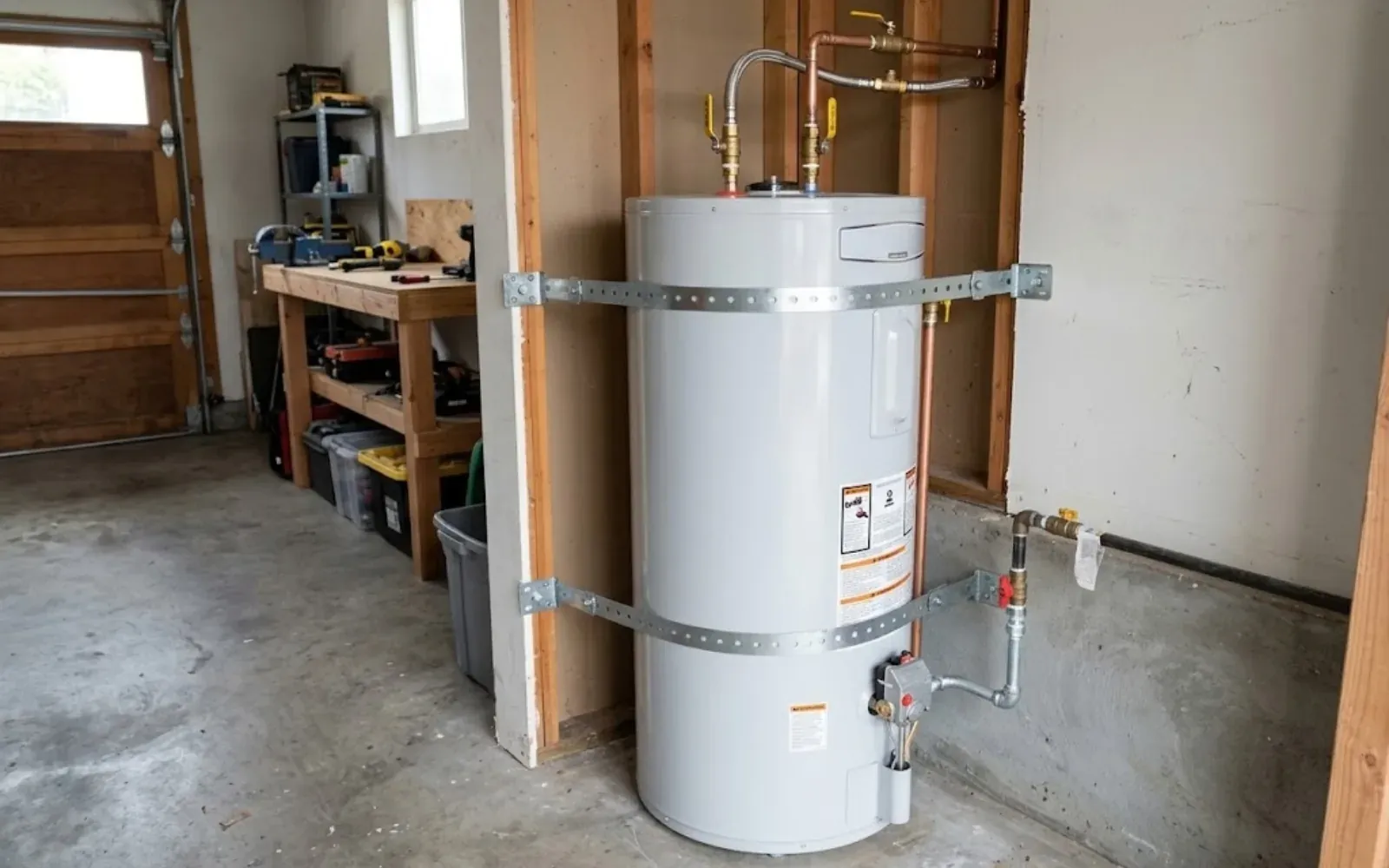
If your water heater just failed, the first question is how long you will be without hot water. As general plumbing knowledge, a like-for-like tank swap with the same fuel and an intact vent commonly takes about 2 to 4 hours of working time. Treat that as a hedged range, because every basement and utility closet is a little different.
The number that surprises people is the gap between the work and the wait. Once the new tank is full and firing, it still needs time to heat, and most tanks take a few hours to recover. Plan for hot water later the same day, not the minute the plumber packs up.
Rough working time by type of job
These are broad ranges from general trade experience. They are not promises, and a plumber who has seen your heater can narrow them. Homes in Granby and Bloomfield run on the same ranges.
| Type of job | Rough working time | What drives it |
|---|---|---|
| Same-fuel tank swap, vent in good shape | About 2 to 4 hours | Draining, setting, connecting and testing |
| Tank swap with a vent change | About 4 to 6 hours | New flue liner, power vent or plastic vent run |
| Gas to electric, or electric to gas | A half day to a full day | New gas pipe or a new circuit, plus vent work |
| Tank to tankless | A full day, sometimes more | Gas line size, vent, condensate drain, wall mounting |
| Heat pump water heater | A half day to a full day | Space, condensate drain, electrical supply |
A timeline for the day of the swap
This is the order most water heater replacement jobs follow, with rough time for each stage.
Shut off and drain (30 to 60 minutes)
The plumber closes the water and the fuel, then drains the old tank to a floor drain or outdoors by hose. A tank with a lot of sediment drains slowly.
Disconnect and carry out (30 to 60 minutes)
Pipes, vent and gas or electric come off, and the old tank goes up the stairs. Tight access adds time here.
Set and connect (1 to 2 hours)
The new tank goes on a pan or stand, then valves, connectors, relief valve piping, expansion tank and vent are fitted.
Fill, test and fire (30 to 60 minutes)
The tank is filled with a hot tap open to purge air, joints and gas connections are checked for leaks, and the burner or elements are started and watched.
What stretches a two-hour job into a long day
Almost every long job comes from something the old tank was hiding.
Venting changes
A new unit may not suit the old chimney flue. A liner, a power vent or a sealed plastic run adds parts, drilling and sometimes a second visit.
Gas line work
A larger input rating or a longer run can mean a bigger gas pipe. That is plumbing and piping work under Connecticut law and needs a licensed plumber.
Fuel conversion
Changing between gas and electric means new pipe or a new circuit. Expect the electric side to involve a licensed electrician.
Poor access
Narrow stairs, a crawlspace or an attic spot slow every stage, and a full tank is heavy to move.
Expansion tank
A closed system with a backflow device or pressure-reducing valve may need one added, with a bracket and a pressure check.
Code fixes on old work
Missing relief valve piping, a rusted vent or corroded unions have to be brought up to standard before the new tank goes in.
No hot water today?
Same-day appointments are offered when available, and the 24/7 line stays open.
When a repair beats a replacement
If only a part has failed, such as a thermostat, an element or a gas valve, water heater repair can take well under an hour and avoid a swap altogether. A leak from the tank body itself is different, because a tank that is leaking through the shell cannot be patched.
DOE puts the life of most storage tanks at 10 to 15 years. If yours is near that and has needed more than one repair, the repeated visits can add up to more time and money than one replacement.
If you smell gas, leave first
Gas smell with a gas water heater
Leave the building, do not flip switches or use a phone near the odor, and call Connecticut Natural Gas at 866-924-5325 or 911 from outside. Call a plumber after the gas company says it is safe.
Prep that saves time on the day
- Clear a path from the door to the heater, and move boxes and stored items away from it.
- Find the main water shutoff and the heater's own shutoff, and tell the plumber where they are.
- Note any floor drain or outdoor spot that can take about 40 gallons of hot water.
- Mention stairs, low ceilings, attics or crawlspaces when you book, since these change the plan.
- Have the old tank's label photographed, so the plumber can see the model, capacity and fuel.
What Simsbury homeowners should know about gas and hard water
For gas units, the Connecticut Public Utilities Regulatory Authority lists Connecticut Natural Gas as the gas company for Simsbury, with a note that parts of town can differ from the table. If you are unsure which utility serves your street, check your gas bill. The state also says never to turn gas back on after a safety shutoff, so leave that to the gas company, not to a work crew in a hurry.
Water quality affects how the day goes. Aquarion's 2025 Simsbury Regional report shows hardness averaging 10 grains per gallon, with a range of 4 to 16, and it says two of the wells are treated to reduce hardness. Hardness is not regulated by EPA or the state health department, but the minerals it carries settle as scale and sediment in a tank that has run for years.
That is why an old tank may drain slowly or stop draining, and why a crusty drain valve sometimes needs replacing. The Town says Aquarion is the provider in most cases, but Connecticut Water, the Tariffville Water Commission and private wells also serve parts of Simsbury. If you are not on Aquarion, ask your utility for its hardness figure rather than assuming these numbers.
Frequently Asked Questions
Usually yes, but not instantly. After the tank is filled and fired, most take a few hours to heat the full volume, and a larger tank takes longer. Ask your plumber for the recovery time of the specific unit.
Often, when an appointment is open and the right unit is on hand. Same-day appointments are offered when available, and the 24/7 line is open for tanks that are actively leaking. A special vent kit or an unusual size may need to be ordered first.
The whole house water is off only for the shutoff and the reconnection, which is often an hour or two. Cold water can usually be restored once the new connections are tight, while hot water waits for the tank to heat.
It can, indirectly. Sediment in an old tank slows the drain-down and can clog the drain valve, which adds a few minutes or forces a different draining method. If your water is on the harder end of Aquarion's reported range, expect the old tank to be crusty inside.
It might. The Simsbury Building Department page does not mention plumbing permits, so ask your plumber and the Department whether one applies to your job. If an inspection is required, the schedule can add time after the work is done.
- PURA, who to call for natural gas emergencies (coverage by town)
- PURA, what to do if you smell natural gas
- Aquarion 2025 Simsbury Regional water quality report
- Town of Simsbury water FAQ
- US DOE Energy Saver Guide 2022
- Town of Simsbury Building Department
- 2022 Connecticut State Building Code (2021 IPC plumbing edition), CT DAS Office of State Building Inspector