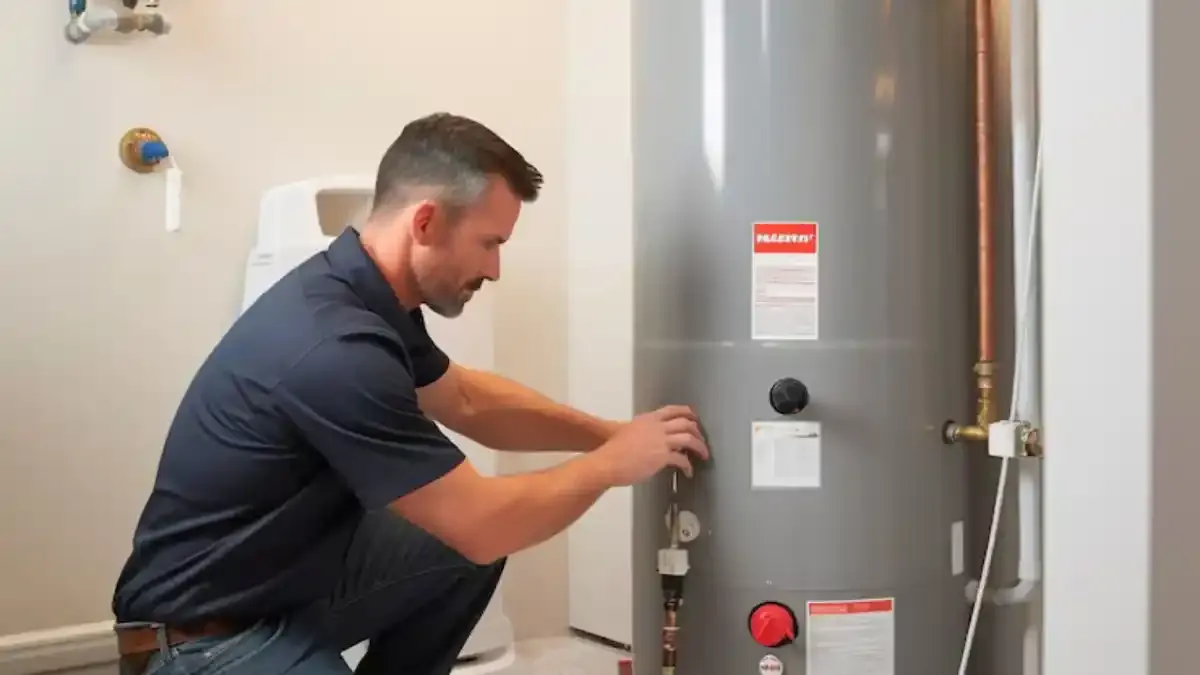
Most people searching for water heater installation cost in Simsbury, CT want a number. We do not publish prices, because the same 40-gallon swap can be a quick job in one basement and a half-day rebuild in the next. What we can do is show you what moves a quote, so you can read any estimate with a clear head.
A finished quote names the unit, the fuel, the venting, the code parts and the removal of the old tank. When one of those is missing, the gap tends to show up as an add-on after the old heater is already drained. The sections below take each piece in turn, then show how to set two quotes side by side.
Tank, tankless or heat pump is the first big fork
A conventional storage tank is the baseline. The US Department of Energy says most storage water heaters last 10 to 15 years, and a like-for-like swap onto existing gas or electric connections is the simplest scope. When the old tank is leaking or past that age, water heater replacement with the same type of unit is usually the cleanest job to price.
A tankless unit generally costs more to buy and often more to install, because it can need a larger gas line, different vent pipe and a condensate drain. DOE says tankless models can last more than 20 years, which is why some owners accept the higher starting price.
A heat pump water heater pulls heat from the surrounding air instead of making it directly. DOE says an ENERGY STAR certified one uses 70% less electricity than a standard electric model, and that in a basement it can also dehumidify in summer. It needs space, airflow and a suitable room temperature, so DOE tells owners to consult an installer first.
Cost drivers side by side
Each row below changes the hardware, the hours or the inspection, and each one is a fair question to put to a plumber.
| Cost driver | Why it changes the quote | What to ask |
|---|---|---|
| Unit type | Tank, tankless and heat pump units differ in hardware, labor and what the house must support | Which type is priced, and what is left out? |
| Fuel | Gas, electric and propane need different connections, and switching fuel means new gas pipe or a new circuit | Is this the same fuel as today? |
| Venting | A chimney flue, power vent or sealed plastic vent each means different parts and labor | What vent material and route are included? |
| Size | A bigger tank or a high-flow tankless unit costs more and may need heavier gas or wiring | How was the size chosen for my household? |
| Access | Tight closets, steep stairs and attic spots add labor and time | Will the heater fit through the path to its spot? |
| Code and permit items | Expansion tank, relief valve piping, shutoff valves and any permit paperwork add parts and steps | Which of these are in the price? |
Venting is where basements surprise people
Most unplanned charges trace back to the vent. A tank that used an old masonry chimney may not suit a newer high-efficiency unit, and a flue liner, a power vent fan or a sealed plastic run changes both the parts list and the hours. EPA names back-drafting from gas water heaters and blocked or leaking flues among the indoor sources of carbon monoxide, so the vent is the last place to save money.
Fuel behaves the same way. Moving from gas to electric, or the reverse, means a new circuit or new gas piping, and Connecticut law counts gas and water piping as licensed plumbing and piping work. Ask whether the quote assumes the old connections will be reused, and what happens if the plumber opens things up and finds they will not pass.
Access matters too. A full tank is heavy, and a narrow basement stair or an attic spot adds labor, so mention it when you call. Corroded unions or a seized shutoff behind the old tank can add parts that nobody can see until it is out. For a first-time water heater installation where no heater stood before, expect more piping and venting work than a swap.
Need a heater swapped soon?
Same-day appointments are offered when available, and the 24/7 line is always open.
Line items that belong on a written quote
A clear price before work starts should let you tick off every one of these, or tell you why one does not apply.
- The make, capacity or flow rate, fuel type and efficiency type of the new unit.
- New shutoff valves and flexible connectors, instead of reusing the old ones.
- An expansion tank, if your system is closed by a backflow device or a pressure-reducing valve ahead of the heater.
- A temperature and pressure relief valve, with the route of its discharge pipe described.
- Vent parts and any flue liner, power vent or condensate drain the unit needs.
- A drain pan where a leak would damage a finished floor.
- Haul-away of the old tank, since not every crew takes it with them.
- Permit paperwork, if one applies, and who handles it.
How to compare two quotes line by line
The same method works for a quote you get in Avon or Canton, where neighbors often shop around before deciding.
Match the unit
Write down the type, capacity or flow rate, fuel and efficiency for each quote. If they differ, you are comparing two different jobs.
Match venting and connections
Check that both include the same vent material, gas or electric work, and new valves and connectors.
Match code and permit items
Look for the expansion tank, relief valve piping, drain pan and any permit step on both sheets.
Match removal and terms
Compare haul-away, cleanup, manufacturer warranty registration and who answers if something leaks after the install.
Why we do not quote a number in a blog post
A fair price needs a look first
The honest number comes after someone sees the heater, the vent and the path to it. Ask for a clear price before work starts, and ask what would change it. A plumber who answers that question plainly is easier to trust than one who throws out a figure over the phone.
What Simsbury homeowners should know about licenses and permits
Before anyone touches your gas or water piping, check the license. The Connecticut Department of Consumer Protection runs the eLicense lookup and calls its data primary source verification. Search the business or the person, then look for an active or approved status. A P-1 is the unlimited plumbing contractor class, while a P-2 journeyperson may work only while employed by a licensed contractor.
Plumbing and pipefitting licenses expire every year on October 31, so an old card can be stale. State law also says a licensee must carry the license and show it on request. If a price looks oddly low, a two-minute lookup is the cheapest check you can run, and DCP takes complaint questions at 1-800-842-2649 if you have a credential number.
On permits, the Town of Simsbury Building Department page points to its permit guides and online permit center, but it does not mention plumbing permits. We will not guess at a rule the page does not state. Ask your plumber whether a permit and inspection apply to your job, then put the same question to the Building Department so you hear it from the town.
Frequently Asked Questions
We do not publish prices because they depend on the unit type, fuel, venting, size, access and code parts. A same-fuel tank swap with existing connections sits at the simple end, and a tank-to-tankless move or a fuel change sits at the other. Call the 24/7 line and we will give you a clear price before work starts.
It depends on how much hot water you use. DOE says gas on-demand heaters can be 24% to 34% more efficient than storage models in homes using 41 gallons or less a day, and 8% to 14% at about 86 gallons a day. Homes with several showers running at once may need two units, which adds to the install.
Not always. Some quotes cover draining, disconnecting and hauling the old tank, and others leave disposal to you. Ask for haul-away as its own line so it cannot appear later as an extra.
The Simsbury Building Department page does not mention plumbing permits, so we cannot tell you a rule from it. Ask your plumber if a permit is being pulled and by whom, then confirm with the Building Department directly. Connecticut's 2022 State Building Code, based on the 2021 International Plumbing Code, is the one currently in effect.
Use the DCP eLicense lookup at elicense.ct.gov, search by name or business, and look for an active or approved status. Remember that individuals hold the licenses, and journeyperson licenses apply only while working for a licensed contractor.
- US DOE Energy Saver Guide 2022
- Connecticut DCP eLicense lookup
- DCP plumbing license types and scope of work
- DCP how to verify a license
- Connecticut General Statutes chapter 393 (plumbing)
- Town of Simsbury Building Department
- CT Office of the State Building Inspector, code history
- EPA, what is carbon monoxide
- 2022 Connecticut State Building Code (2021 IPC plumbing edition), CT DAS Office of State Building Inspector