A wet basement usually has a simple story. Rain or snowmelt reaches the foundation, the soil is saturated, and the water finds a crack, a joint or the seam where the wall meets the floor. Fixing the water before it gets to the wall is the cheapest form of waterproofing, and a lot of that work is outdoors.
This guide separates the jobs a careful owner can do on a weekend from the ones that need machines and trained crews. It also explains when working from the inside, with a drain channel and a pump, is the better route. Homeowners in Avon and Bloomfield face the same choices.
Start with the water you can steer: grading, gutters and downspouts
The EPA's mold guidance says to make sure the ground slopes away from the building so water does not collect against the foundation, and to clean and repair roof gutters regularly. Both are cheap. A roof sheds a lot of water in a storm, and it lands at the foundation unless a gutter and a downspout extension move it.
Walk the house during a hard rain. Look for gutters that overflow at the corners, downspouts that dump at the foundation and low spots where puddles stand against the wall. Clear the gutters, lengthen the downspout extensions, then build up the soil so it drops away from the house.
Window wells, cracks and other small openings
These smaller jobs are well suited to a homeowner with basic tools.
- Clear leaves from window wells and check that each well can drain, since a clogged one fills like a bucket.
- Add a clear cover to a window well that collects rain, with room for air.
- Seal small, dry hairline cracks in the foundation with a masonry sealant, and note whether they leak again after rain.
- Check where pipes, cables and hose bibs pass through the wall and caulk gaps that let water in.
- Pull mulch, soil and plants back from the siding line so the foundation is exposed and visible.
A simple test before you spend money
Tape a square of aluminum foil tightly to the basement wall and leave it for a day or two. If moisture collects on the room side of the foil, humid air is condensing, which is a ventilation problem. If the wall side is wet, water is coming through the concrete.
That small test saves a lot of money, because the cures are different. A dehumidifier and better airflow solve condensation, and they do nothing for seepage. Drying wet materials within 24 to 48 hours matters either way, since EPA says that is the window to prevent mold.
Why full exterior excavation is rarely a DIY job
True exterior waterproofing means digging a trench along the foundation down to the footing. The crew cleans and repairs the wall, applies a membrane, sets a drain at the footing, then backfills with gravel. A deep trench is a cave-in hazard, and nobody should work in an unsupported one.
It also puts you near buried lines. A homeowner using power equipment must call Call Before You Dig at least two full working days ahead, calling is encouraged for hand digging, and a contractor you hire must make the call. Add an excavator, spoil disposal, landscaping repair and the risk of damaging the footing or a utility, and the job is a poor fit for an amateur.
Basement taking on water now?
Our 24/7 line is open, and same-day appointments are available when the schedule allows.
DIY exterior work versus professional interior drainage
Both can work. They solve different problems, and the choice depends on the house.
DIY exterior fixes
- Best for roof runoff, poor grading and clogged window wells.
- Low cost and no heavy equipment, but only treats surface water.
- Cannot relieve water pressure from a high water table.
- Needs 811 calls and care if any digging is involved.
- Results show up in the next hard rain, so you can judge them yourself.
Professional interior drainage
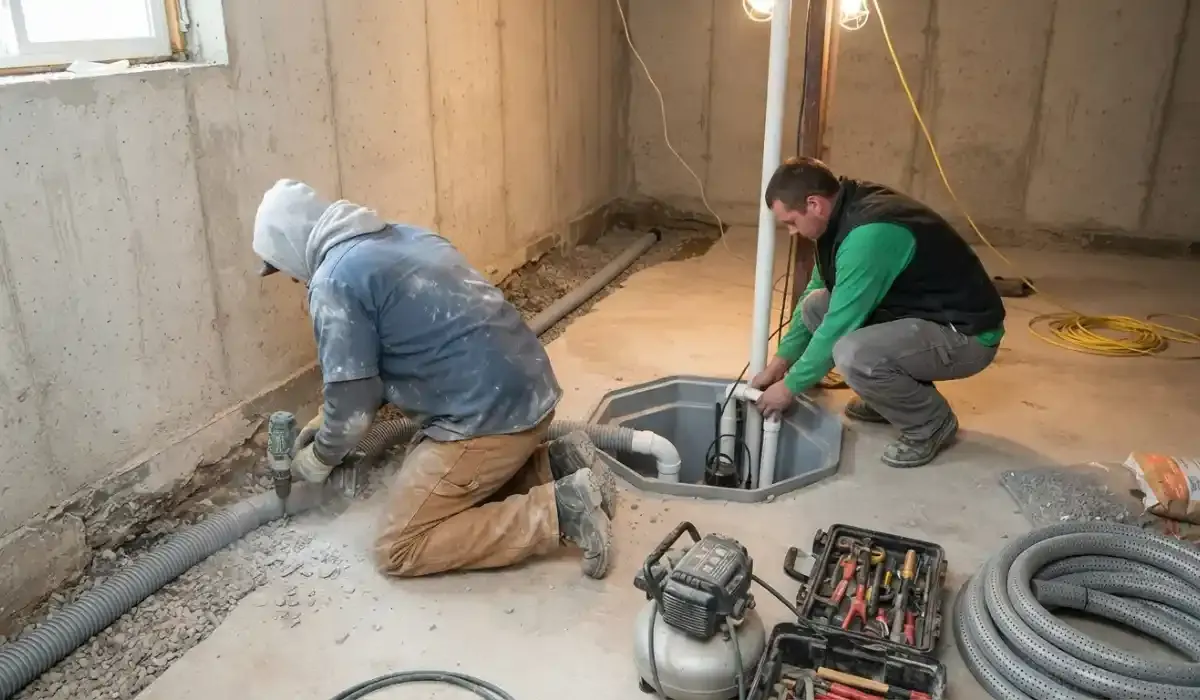
- A drain channel along the footing leads water to a sump pit and pump.
- Works from inside, so no trench, no torn-up landscaping and no exposed utilities.
- Handles water that comes up at the floor and wall joint.
- Needs a pump, electrical and a backup, and the floor is cut open.
- Cost depends on the length of wall, pit work and finishes, and is quoted after a site visit.
When interior drainage is the better route
Interior drainage makes more sense when a deck, patio, driveway or tight lot line blocks the outside wall. It is also the better bet when water rises at the floor joint during storms, or when you have already fixed the gutters and grading and water still comes.
That route usually pairs a perimeter drain with a pump, and the pump is the part that runs when it matters. A sump pump installation plan should include a backup for power outages, and the wider approach is covered under basement waterproofing. Downspouts that tie into underground pipes can clog too, and a blocked line is a case for drain cleaning instead of digging.
Know when to stop and call
- Horizontal cracks, bowing walls or stair-step cracks in block can indicate structural stress, and an engineer should see them before any sealing job.
- Water coming from a pipe, a water heater or a washer is a plumbing problem, not a drainage one.
- Standing water near outlets or the electrical panel is a reason to leave the area and not use power equipment.
- Sewage backing up from floor drains needs a different response and should not be treated like groundwater.
What Simsbury homeowners should know about the river, storms and digging
Before any shovel goes in, call 811. Connecticut's Call Before You Dig service can be reached at 811 or 1-800-922-4455, the service is free and it marks buried utilities. The state's release says failure to notify the 811 center remains the largest single root cause of damage to underground lines. Do it even for a trench you plan to dig by hand.
Most of Simsbury lies in the Farmington River watershed, and the town's hazard plan records how storms behave here. In the summer 2021 storms, small drainage systems were overwhelmed and Lucy Brook overtopped East Weatogue Street, and Tropical Storm Irene in August 2011 closed Route 185 at the same street. That tells you to fix your gutters and grading for storm volume, not for a light rain.
Surface fixes help in storms like those, but they will not lower a high water table. If the basement stays wet after the outside work, have an interior solution quoted.
Frequently Asked Questions
Waterproofing paint can slow damp walls, but it does not stop water pushing through under pressure. It tends to peel when water gets behind it.
Use it only for minor dampness after the outside water problem has been addressed.
As far as the grade and your property lines allow, and always onto ground that slopes away from the foundation. A short stub that drops water beside the wall defeats the purpose.
If the downspout must go underground, ask a plumber about a solid pipe that ends in daylight, and keep it clear.
The state says calling is required for power equipment two full working days ahead, and encourages it for hand digging. A contractor you hire is responsible for making the call.
The service is free, so call anyway. The Connecticut Call Before You Dig number is 811.
The Insurance Information Institute says water that seeps into a basement from the ground is excluded under a standard HO-3 policy and is not covered by flood insurance unless it is a flood, and sewer backups are excluded too.
Ask your agent which endorsements you have. A burst pipe is a different matter and is generally covered.
Clear gutters and window wells, extend downspouts and test the sump pump by pouring water in the pit. UConn Extension advises the same checks before heavy rain.
Move valuables off the basement floor, and know where the electrical panel and main water shutoff are.
- CT PURA: Call Before You Dig
- CT PURA: CBYD clearinghouse and homeowners
- CT PURA: April 2026 Call Before You Dig Month
- Capitol Region hazard mitigation plan, Simsbury chapter (2024)
- Capitol Region natural hazards mitigation plan update, Simsbury (2014)
- EPA: a brief guide to mold, moisture and your home
- UConn Extension: preparing for heavy rain
- Insurance Information Institute: am I covered
- 2022 Connecticut State Building Code (2021 IPC plumbing edition), CT DAS Office of State Building Inspector