Plumbing installation in Simsbury, CT means connecting new water supply, drain and vent lines to fixtures and appliances, and moving existing lines when a room changes. It covers toilets, sinks, tubs and showers, laundry boxes, dishwasher and ice maker lines, outdoor spigots and water treatment equipment. The work follows the plumbing code that Connecticut has adopted, which is currently the 2021 International Plumbing Code with state amendments.
Most installs are planned, so you can schedule them in the day. If a failed fixture or a sudden leak forces the issue, our 24/7 emergency line is open, and same-day appointments are available when the schedule allows.
This page is about what to expect when you add or replace plumbing, what you need to supply and when state law says a licensed plumber must do the work.
What we install
Toilets and bidet seats
We set the bowl on a new wax ring or seal, connect a fresh supply line and test for leaks. See toilet repair and installation for repairs and elongated or comfort-height swaps.
Sinks and faucets
Kitchen, bath and utility faucets, new stops and supply lines. For a failing fixture, faucet repair is the faster route.
Garbage disposals and dishwashers
We mount the unit, connect the drain and reconnect the dishwasher line. See disposal repair and installs.
Laundry hookups
Washer boxes with hot and cold valves and a drain standpipe at the right height.
Ice maker and appliance lines
A saddle or tee valve on the supply, a short run of line and a shutoff you can reach.
Water filters and softeners
Mounting, bypass valves and drain connections for equipment you buy or we help you choose.
Rough-in versus finish plumbing
Remodels split into two plumbing visits, and knowing which is which keeps the schedule moving.
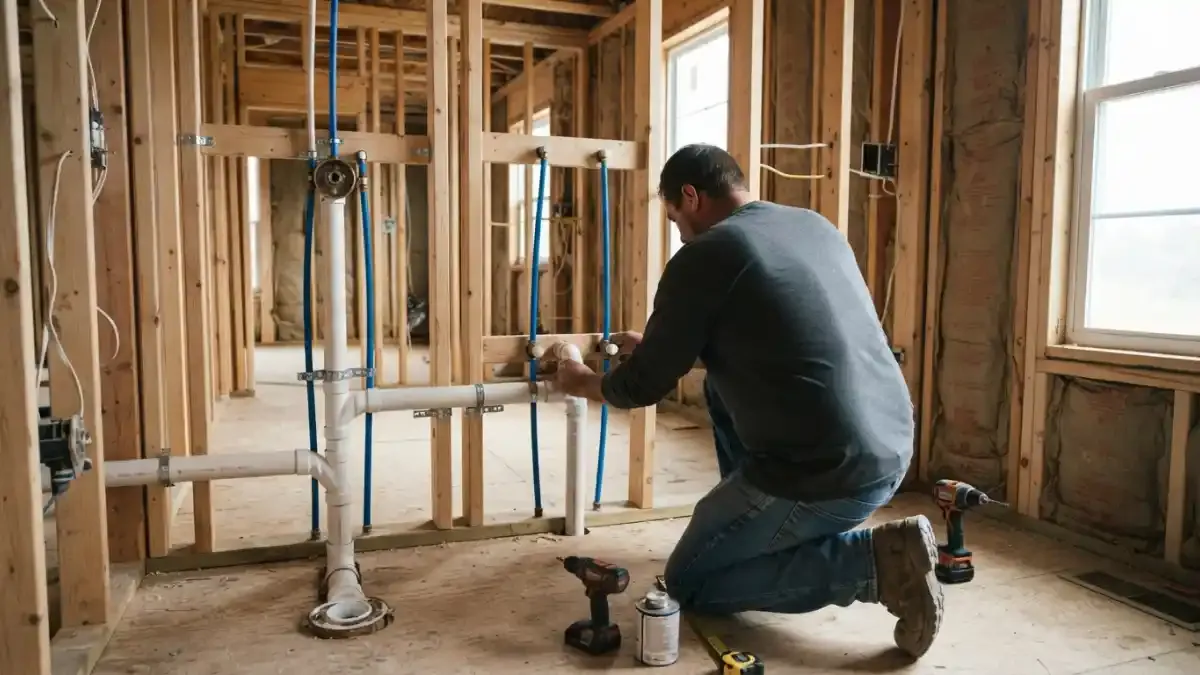
Rough-in
- Happens with the walls and floor open
- Drain, vent and supply pipes go in place
- Water lines are pressure-tested
- Inspection often falls here
Finish
- Happens after drywall, tile and cabinets
- Fixtures, faucets and valves are set
- Stops and trim are installed
- Final leak check and flow test
Who must be licensed in Connecticut
State statute defines plumbing and piping work as installing, repairing, replacing, altering or testing water and gas piping and fixtures. It also covers the lateral lines from a building to the mains and connections to backflow devices. The same statute bars anyone from offering licensed work, even in advertising, without the license.
There is an exemption. The statute lets owners do plumbing in a single-family home they own and occupy, but the work is subject to inspection and approval by the municipal building official and must meet the State Building Code. Ask the Simsbury building department about permits and inspections before you start.
Verify any plumber you hire
The Department of Consumer Protection runs a license lookup at https://www.elicense.ct.gov. Choose the lookup, search by name or business, and look for an active or approved status. Licenses expire every October 31, so a status check is quick and current.
Planning a project?
Call to schedule an install, and use the 24/7 line if a failure cannot wait.
Opening walls in Simsbury's historic districts
The Town lists four National Register districts, East Weatogue, Simsbury Center, Tariffville and Terry's Plain. Older homes in districts like these tend to have a mix of pipe materials from different repairs, so surprises behind a wall are more common than in recent construction. That is a tendency and not a claim about any particular house.
If you live in one of these areas, plan a short survey of the existing lines before you commit to a layout. A camera on the drain and a look at the shutoffs and pipe materials tells us where the work is easy and where it will take patience. Tell us if you have plans to preserve plaster or trim, and we will route lines to limit damage.
What you supply and what we supply
| Item | You supply | We supply |
|---|---|---|
| Fixtures (toilet, faucet, sink) | Often, if you want a specific model | Installation, seals and connectors |
| Supply lines and stops | Rarely | New braided lines and quarter-turn stops |
| Pipe, fittings and solder | Never | All rough-in materials |
| Water softener or filter | The unit, if you have chosen one | Mounting, bypass and drain hookup |
| Tile, cabinets and drywall | Yes, or your contractor | Not part of plumbing |
How an install visit runs
Walk the job
We look at the location, water pressure, shutoffs and drain size, and measure for the new fixture.
Agree the price
You get a clear price before work starts, with the parts split between yours and ours.
Install and connect
We shut the water, set the fixture, make the connections and secure everything.
Test and clean
We check for leaks, check flow and pressure and take away packaging and old fixtures.
Water pressure, softeners and fixtures
The EPA says fixtures work best between 45 and 60 psi, and recommends testing with a gauge on a hose bib with everything off. If your pressure is well above that, we can add a pressure-regulating valve during an install. If it is far below, the problem may be a leak or a partly closed valve.
Aquarion's 2025 Simsbury report lists average hardness of 10 grains per gallon, so a softener is a common request. EPA advises annual professional service on softeners and checking salt levels. Not every address uses Aquarion, so test your tap before sizing a unit.
What shapes the cost of an install
We do not publish prices, because a faucet swap and a bathroom rough-in have little in common. You get a clear price before work starts.
Installations are planned work, so insurance does not usually cover them. If a failed install later causes water damage, coverage depends on your policy. Ask your agent and keep your installation paperwork.
Honest limits
We do not do tile, carpentry, electrical or gas appliance work beyond plumbing connections. For a gas smell, leave the building and call Connecticut Natural Gas at 866-924-5325 or 911 first. If you plan to dig for a new line, call 811 at least two full business days before using power equipment. Our work also reaches nearby Avon.
Frequently Asked Questions
Yes. Tell us the model number so we bring the right seals and connectors. We install the fixture and test it, and we will tell you if something is missing.
State statute treats installing or altering water and gas piping and fixtures as plumbing work, and unlicensed offering of that work is barred. Owners may do work on a single-family home they own and occupy, subject to inspection by the building official.
We do not state a rule here. Ask the Simsbury building department what applies to your project before work starts.
Use the DCP eLicense lookup at https://www.elicense.ct.gov and search by name or business. Look for an active or approved status.
Yes. We install the valve, the supply line and the drain standpipe for a washer, and a shutoff and line for an ice maker.
Often, though moving drains and vents is more involved than moving supply lines. We check the slope, the vent and the framing before agreeing.
They can, because pipe materials may be mixed from different repairs. That is a tendency. A short survey before work removes most surprises.